When most people hear “turnkey,” they think convenience — one vendor, less hassle, fewer phone calls. That’s true, but it badly undersells the point. Convenience doesn’t grow a business. What actually moves the needle is something turnkey delivers as a by-product: it shortens the distance between your investment and your first rupee of revenue.
For any new plant or production line, the clock starts the day you commit capital and doesn’t stop until you’re selling a product. Every week in between is money spent with nothing coming back. Turnkey project execution exists to compress that gap. Understanding how it does that — and where it can go wrong — is the difference between a smart engagement and an expensive one.
What “Turnkey” Actually Means
A turnkey solution means a single partner takes a project from concept to commissioning and hands you a running operation — you “turn the key” and produce. That partner owns the design, machinery selection, civil and utility coordination, installation, licensing support, trial runs and final handover.
The opposite is self-assembly: you hire a machinery supplier here, a civil contractor there, a licensing consultant somewhere else, and you become the project manager stitching them together. That can work — but you absorb every coordination gap, every “that’s not my scope” dispute, and every delay that cascades when one vendor slips. Turnkey moves that burden off your desk and onto one accountable party.
The Real Growth Lever: Compressing Time-To-Revenue
Here’s the mechanism, stripped of marketing language. Turnkey accelerates growth through four concrete levers:
Speed- Parallel execution. A turnkey team sequences civil work, machinery procurement and licensing to overlap rather than queue, which can cut months off a launch. Months saved are months of earlier production and earlier cash flow.
Single accountability- When one partner owns the outcome, there’s no finger-pointing when something breaks. You have one number to call and one entity contractually responsible for the plant working. That’s not just convenient — it removes the project-management overhead that quietly drains a founder’s time and attention away from sales and strategy.
Capital efficiency- A good turnkey partner sizes the plant to your actual market and budget, not to an optimistic template. Right-sizing avoids the two classic mistakes — over-building capacity you can’t sell, or under-building and being forced into a costly retrofit within a year.
Faster compliance- Across regulated industries — food, beverage, water — licensing is often the hidden bottleneck. FSSAI, BIS, Pollution Control Board, GST and local approvals each have their own timelines. A partner who has navigated them before clears that path far faster than a first-timer learning it live.
Add these up and the value isn’t “we saved you hassle.” It’s “we got you to market a quarter sooner, with less capital tied up.” That compounds.
Turnkey Across Industries – What It Looks Like in Practice
The phrase “across industries” only means something when it’s concrete. Here’s how the same turnkey discipline plays out in three very different verticals.
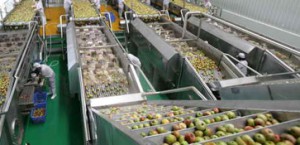
Food processing. Abiscuit and bakery plant needs mixing, forming, baking, cooling and packaging lines synchronised to a single throughput, plus FSSAI-compliant hygienic design. Get the line balance wrong and you have a fast oven feeding a slow packer — bottlenecks that bleed margin every shift. Turnkey design solves for the whole line, not isolated machines.
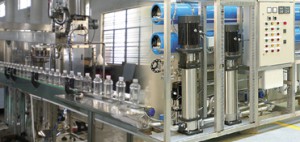
Beverages. Afruit juice plant or amineral and packaged water plant combines treatment, processing, filling and packaging under strict quality and shelf-life requirements. Here the turnkey partner’s job is integrating purification, filling accuracy and compliance into one validated process — because a beverage line is only as good as its weakest hygienic link.
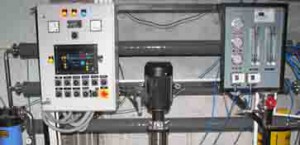
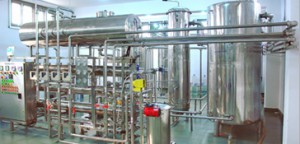
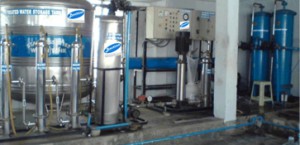
Water and environment.RO, ETP, STP and DM plants are engineered around your specific water or effluent profile and your Pollution Control Board consent conditions. There’s no off-the-shelf answer; the design is the value. Turnkey execution here means the system is built to pass audits from day one, not patched into compliance after a notice arrives.
Different industries, same principle: integrate the whole system around your outcome, and own the result end to end.
The Catch Nobody Puts in The Brochure
Turnkey concentrates your risk in one vendor. That’s the honest trade-off, and pretending otherwise does you no favors. If you pick the wrong partner, you’ve handed a single point of failure control over your entire project — and switching mid-stream is painful and expensive.
This isn’t a reason to avoid turnkey. It’s a reason to choose the partner carefully, because the model amplifies whatever you select. De-risk it by checking three things before you sign: a track record of commissioned plants in your specific industry (not just brochures), transparent scope boundaries in writing so “turnkey” doesn’t quietly exclude licensing or trial runs, and post-handover support — because a plant that runs on day one but has no service backing is a liability waiting to surface.
A serious turnkey partner welcomes those questions. A weak one deflects them.
Why Kolkata Businesses Choose Turnkey Project Solutions
For entrepreneurs in the East, turnkey project solutions in Kolkata offer a specific advantage: a local partner who understands regional licensing, the West Bengal Pollution Control Board’s expectations, local supply chains and ground realities that a distant national vendor simply doesn’t. Proximity also matters after handover — when a line needs servicing, a partner an hour away beats one a flight away.
This is the core of what Priti International does. We deliver complete turnkey projects across food processing, beverage and water-treatment industries — from initial costing and machinery selection through installation, licensing and commissioning — built around your market, your budget and your compliance requirements. If you’re weighing a new plant and want a partner who’ll tell you what you actually need before recommending equipment,start a conversation with our team.
FAQ
Is turnkey more expensive than managing it myself?
Often the headline quote looks higher, but it usually costs less in total once you account for coordination delays, retrofit risk and your own time. The real saving is faster time-to-revenue.
Which industries suit turnkey project solutions?
Any project with multiple interdependent systems and regulatory steps — food processing, beverages, packaged and mineral water, and water/effluent treatment are all strong fits.
How do I choose a turnkey partner in Kolkata?
Look for commissioned projects in your specific industry, written scope clarity, and genuine post-handover support. Local regulatory familiarity is a real advantage in West Bengal.