In September 2025, the GST Council did something that made headlines for consumers: it cut the tax on packaged drinking water. Cheaper water cans, lower bottle prices, relief for households and offices. If you’re thinking about setting up a plant, the obvious takeaway is “lower tax, great time to invest.”
It isn’t that simple and the difference between the simple version and the real version is exactly what separates investors who plan their cash flow from those who get surprised by it. This guide walks through what actually changed, the one consequence most articles skip, whether 2026 is a sensible time to enter, and a grounded breakdown of packaged water plant cost in India.
What Actually Changed in the GST on Packaged Water
Effective 22 September 2025, the GST Council’s 56th meeting cut the rate on packaged drinking water including 1-litre bottles and 20-litre jars from 12%/18% down to 5%, under HSN chapter 2201/2202. Plain, unbranded, unsealed water remains exempt (0%). At the same time, carbonated, aerated, flavoured and energy drinks were pushed up to 40% as “sin goods.”
One caveat worth stating plainly, because the trade press is not fully consistent on it: the clean 5% applies to plain packaged drinking water and 20-litre jars. “Mineral water” with added minerals, and anything carbonated or flavoured, can fall under different classifications and higher rates. Before you fix your pricing, confirm your exact HSN classification with a GST practitioner — getting this wrong on invoices is a common, avoidable compliance headache.
The Part Most “good news” Articles Leave Out
Here is the consequence that rarely makes it into the celebratory coverage, and the single most important thing for a manufacturer to understand:
Your output is now taxed at 5%, but most of your inputs are still taxed at 18%.
Plant and machinery, RO and filtration systems, PET preforms, caps, labels, electricity, maintenance services these largely carry 18% GST. You pay that tax up front and accumulate it as Input Tax Credit (ITC). You then offset ITC against the GST you collect on sales. When your sales GST is only 5%, you simply cannot absorb all the credit you’ve paid. The result is an inverted duty structure: credit piles up faster than you can use it.
That credit isn’t lost; you can claim a refund of accumulated ITC under Section 54(3) of the CGST Act. But refunds take time and paperwork, which means the cut quietly converts into a working-capital drag, not a windfall. For a new plant already managing setup costs, that timing matters.
This is not a reason to avoid the business. It’s a reason to model your numbers properly before you commit. A consumer GST cut and a manufacturer GST cut are different events; this one is firmly the former.
So is 2026 Actually a Good Time to Set Up a Plant?
On balance, yes — but for demand reasons, not tax reasons.
India’s bottled water market is large and growing fast: industry estimates put it at roughly $8.3 billion in 2025, heading toward $13–14 billion by 2030, expanding around 10% a year. The drivers are structural — urbanisation, falling groundwater quality, health awareness, and a hospitality and travel sector that keeps expanding. Established players serve the bulk of the market, but new entrants consistently find room in local supply, institutional bulk water, and niche segments like premium or eco-packaged water. Reported gross margins commonly sit in the 20–40% range for well-run operations, with payback typically in the 2–4 year window.
The lower 5% rate does help on the demand side: a lower tax-inclusive price makes packaged water more affordable and nudges volume, especially for bulk 20-litre supply to offices, schools and institutions. So the cut is genuinely positive — it just works through your sales line, not your tax savings.
Packaged Water Plant Cost in India: What You’ll Actually Spend
The honest answer to “what does a packaged water plant cost in India” is: it depends almost entirely on capacity and automation. Here are realistic 2025–26 industry ranges to anchor your planning.
| Plant scale |
Capacity |
Indicative total setup cost |
| Micro / starter (RO only) | 250–500 LPH | ₹1.5 – ₹3.5 lakh |
| Small-scale, semi-automatic | 1,000 LPH | ₹10 – ₹20 lakh |
| Small–medium turnkey | 1,000–2,000 LPH | ₹15 – ₹25 lakh |
| Medium commercial | 2,000–3,000 LPH | ₹22 – ₹40 lakh |
| Large automated line | 10,000+ LPH | ₹50 lakh – ₹2 crore |
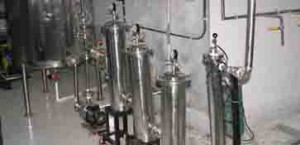
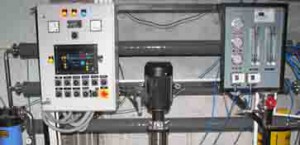
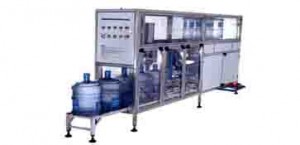
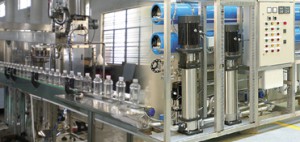
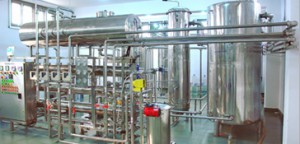
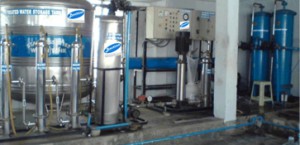
Within these numbers, machinery is usually the largest single block — water treatment (sand and carbon filters, RO, UV, ozonation), the bottle-blowing machine, the filling and capping line, stainless-steel tanks and high-pressure pumps. Quality equipment costs more up front and saves on downtime and repairs later.
For a deeper, component-by-component costing tailored to your target capacity, see ourpackaged drinking water plant setup page, or ourmineral water plant overview.
The Costs First-Time Investors Underestimate
Setup cost is only the visible part. Budget for these too:
- Licensing and compliance: BIS/ISI (IS 14543), FSSAI, Pollution Control Board, GST registration and local approvals — roughly ₹50,000 to ₹2 lakh. Note that FSSAI has classified packaged drinking water as a “high-risk” food category, which means annual third-party audits.
- Recurring costs: electricity, raw water, manpower, packaging materials, lab testing and maintenance. These determine your real margin far more than the headline machinery price.
- Working capital: distribution, inventory, and — as discussed above — the ITC refund lag created by the new 5% rate. Plan a cushion here specifically.
- Effluent handling: RO plants generate reject water; depending on scale you may need ETP/STP infrastructure. See ourRO, ETP, STP & DM plant solutions.
How the GST Change Affects Your Business Plan, Concretely
Three practical implications to build into your model:
- Pricing: the 5% rate lets you price competitively at the shelf, particularly for bulk jars. Use it as a demand lever.
- Margins: your gross margin doesn’t improve just because output GST fell — the tax is collected from the customer, not earned by you. What improves is price competitiveness.
- Cash flow: size your working capital to absorb accumulated ITC until refunds clear. This is the line item most new entrants miss.
Where a Turnkey Consultant Earns Its Fee
The GST cut rewards operators who set up correctly: right HSN classification, clean ITC documentation, compliant FSSAI/BIS processes, and a plant sized to a real distribution plan rather than an optimistic one. Getting these wrong is expensive; getting them right from day one is the cheapest insurance you can buy.
This is the core of what we do at Priti International — end-to-end turnkey setup of packaged drinking water and mineral water plants, from machinery selection and installation to licensing and commissioning. If you want a costing built around your specific capacity, location and packaging mix,talk to our team and we’ll map the full investment — including the parts the headlines skip.
Frequently Asked Questions
What is the current GST on packaged drinking water in India?
Plain packaged drinking water, including 1-litre bottles and 20-litre jars, is taxed at 5% (HSN 2201/2202) from 22 September 2025, down from 12%/18%. Mineral, flavoured or carbonated waters can attract higher rates depending on classification.
Does the GST cut reduce my cost of setting up a plant?
No. The cut applies to the water you sell, not to your machinery and inputs, which still largely carry 18% GST. In fact it can create an inverted duty structure that ties up working capital through accumulated input tax credit.
What is the minimum packaged water plant cost in India?
A very small RO-based unit (250–500 LPH) can start from about ₹1.5–3.5 lakh, while a small-scale semi-automatic 1,000 LPH plant typically runs ₹10–20 lakh all-in.
How profitable is a packaged drinking water plant in 2026?
Well-run plants commonly report gross margins of 20–40% with payback in roughly 2–4 years, supported by a bottled-water market growing around 10% annually. Actual results depend on distribution, utilisation and cost control.
Do I need FSSAI and BIS licences?
Yes. FSSAI registration is mandatory and packaged water is a “high-risk” category requiring annual audits. BIS/ISI certification under IS 14543 signals quality and is often expected by institutional buyers.